Tired of Juggling Family Health Chaos? An App That Keeps Everyone on Track
Living that familiar moment: your child’s medicine schedule overlaps with your partner’s doctor’s appointment, and you can’t remember who took what today. Sound all too real? I’ve been there—overwhelmed, sticky notes everywhere, missed doses, and the constant worry. After months of testing digital health tools, I found one that quietly transformed our family’s rhythm. It didn’t just organize pills and checkups—it brought peace of mind. Let me show you how it works in real life.
The Breaking Point: When Family Health Feels Unmanageable
It wasn’t one big crisis that pushed me over the edge—it was the slow drip of small failures. I remember standing in the kitchen one Tuesday morning, holding my son’s asthma inhaler, asking him, “Did you take your dose last night?” He shrugged. I checked the bathroom counter—was the pill bottle open or closed yesterday? My husband’s blood pressure log had three blank days. And I couldn’t remember if my mom had her cholesterol test last week. That afternoon, I drove 20 minutes to the pharmacy only to find out her prescription wasn’t refillable yet. I sat in the car, gripping the steering wheel, fighting back tears. It wasn’t that anyone was seriously ill. It was that I felt like I was failing at keeping us all just… on track.
Our home wasn’t chaotic in the loud, messy way. No one was yelling. But beneath the surface, there was a constant hum of stress—like a fridge that’s just a little too loud. I was the one always checking, reminding, tracking. My phone was full of voice notes: “Call pediatrician,” “Ask about thyroid results,” “Buy more vitamin D.” I started dreading Sunday nights—when I’d try to map out the week’s meds, appointments, and school nurse forms. The guilt was the worst part. If I forgot something, whose health would pay the price? Was I doing enough? Was I even trying hard enough? It hit me one evening, while lying awake at 2 a.m., that this wasn’t really about health—it was about survival. I needed help, and I needed it fast.
Why Most Health Apps Fail Busy Households
I thought, There has to be an app for this. So I downloaded a bunch. I tried the sleek ones with fancy dashboards, the ones that promised “complete family wellness in one tap.” But most of them made things worse. One app required me to manually enter every single pill, every day—even if it was the same medication. Another had a beautiful interface, but my husband couldn’t log in from his work phone because it didn’t sync across devices. My teen tried one that sent five reminders an hour. She turned it off after two days. These apps weren’t built for real life. They were built for people with time, tech skills, and no actual family chaos.
The biggest problem? They treated health like a solo project. Most apps assume one person manages everything—usually the mom. And that one person is supposed to remember, enter, track, and follow up. I was still the only one opening the app, still the only one stressed. Some didn’t allow shared access at all. Others let you invite family members but made it so complicated that no one bothered. I remember one dashboard had so many tabs and graphs I felt like I was logging into a hospital system. Where was the “simple” button? And why did every notification sound like an alarm? Beep, beep, beep—“Missed dose!” Like I didn’t already feel bad enough.
Then there were the privacy questions. Who could see what? Could my teenager’s mood log be visible to everyone? Did my dad’s blood sugar data go to the cloud? I didn’t want to trade convenience for risk. I wanted something that protected us, not exposed us. What I realized was this: if a health app adds more work, more confusion, or more anxiety, it’s not helping. It’s just another thing to manage. And I didn’t need another task. I needed a teammate.
Finding the Right Fit: What We Actually Needed
So I got honest with myself about what we really needed. First, it had to be simple. No complex menus. No medical jargon. Just clear, clean design—like a well-organized kitchen drawer, not a cluttered junk drawer. Second, it had to be shared. Everyone old enough to take responsibility should be able to log in, see their own stuff, and update when needed. Third, it had to do some of the work for us—automated reminders, refill alerts, appointment syncs. And finally, it had to feel human. Not cold, not robotic. Warm. Encouraging. Like a gentle nudge, not a scolding.
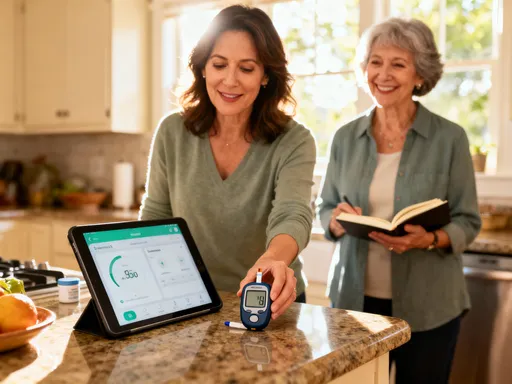
I found an app that met all those needs. When I first opened it, I was surprised by how calm it felt. Soft colors. Friendly icons. A welcome message that said, “Let’s take care of your family, together.” No pressure. No judgment. I invited my husband, my 15-year-old daughter, and my mom (who lives two hours away). Each of them got a simple setup link. My daughter rolled her eyes—“Mom, I’m not using another app”—but within a week, she was logging her inhaler use without being asked. My husband started updating his blood pressure readings after his morning walk. My mom appreciated that she could see her appointment list without calling me every time.
What made the difference was how it fit into our lives, not the other way around. The app learned routines. If my son took his allergy pill every morning at 7:30, it remembered. If my husband had a doctor’s visit every three months, it sent a reminder two weeks ahead. It even let us add notes—like “Call insurance about coverage” or “Bring old prescriptions to next visit.” We could attach files, like lab results or vaccination records. No more digging through email or filing cabinets. And the best part? It didn’t make us feel like patients. It made us feel like a team.
How It Changed Our Daily Rhythm
Our mornings used to be tense. Now, they’re calmer. The app sends gentle alerts—soft chimes, not alarms. At 7:15 a.m., my son’s phone buzzes: “Allergy pill time.” He takes it, taps “Done,” and goes back to his cereal. My husband gets a reminder to take his vitamin D with breakfast. I get a hydration nudge: “You’ve had one glass of water—let’s make it two.” It’s not perfect, but it’s consistent. And the mental load? Lighter. So much lighter.
I’ll never forget the first time my daughter said, “The app buzzed me—I already took my inhaler.” No eye roll. No “I forgot.” Just a calm update. That moment hit me. She wasn’t just following a rule. She was taking ownership. At dinner, my husband mentioned he’d updated his blood pressure log after his walk. “The app asked if I wanted to add a note,” he said. “So I did—said I felt good today.” I smiled. This wasn’t just tracking. It was connection.
We’ve stopped arguing about “Did you take it?” because we can all see the log—respectfully, with permissions set. If someone misses a dose, the app sends a follow-up reminder, not a guilt trip. We’ve avoided last-minute pharmacy runs because refill alerts come three days early. Doctor’s visits are smoother—everyone’s records are in one place. I’ve even started using the family calendar feature to block out “me time” or yoga classes. It’s not just for health. It’s for balance. And for the first time in years, I feel like I’m not holding everything together by a thread.
Beyond Pills: Supporting Emotional and Mental Wellness
What surprised me most was how the app helped us care for more than just physical health. It has a simple mood tracker—just a scale from 1 to 5, with emoji faces. At first, I thought it was fluff. But after a few weeks, I noticed patterns. My daughter rated her mood lower on Sunday nights. We talked. Turns out, she was stressed about school. We adjusted her schedule, added more downtime. She started using the sleep log too—tracking how many hours she slept and how she felt the next day. She discovered she did better on tests when she got eight hours.
I started using the mindfulness prompts. Nothing intense—just little nudges like “Take three deep breaths” or “What’s one thing you’re grateful for today?” I didn’t think much of it until my husband said, “You seem… lighter lately.” I realized I was carrying less mental weight. The app wasn’t fixing my anxiety, but it was giving me tools to notice, pause, and respond.
And slowly, we began encouraging each other. My son saw that I’d hit my step goal and said, “Nice job, Mom!” My daughter celebrated when her asthma symptoms stayed low for a week. We started having real conversations—“You seemed tired yesterday—everything okay?”—because the app made it safe to share. It wasn’t about fixing each other. It was about seeing each other. And that, more than any pill or reminder, changed how we lived.
Privacy, Trust, and Letting Go of Control
I’ll admit—I was nervous about sharing health data. Who could see what? Could my mom’s medication list be viewed by my teen? The app lets you set permissions for each family member. I can see everything, but others only see what they’re allowed to. My daughter has a private journal for her mood notes—only she can view it, unless she chooses to share. My husband keeps his mental wellness check-ins private too. But he gets a reminder if he hasn’t logged in for a few days—just a gentle “We miss your check-in.”
Data is encrypted. Backed up securely. No ads. No data selling. That mattered to me. I wasn’t going to trade my family’s privacy for convenience. The app also lets you choose how much to share. I didn’t have to know every detail of my teen’s day—just that she was on track with her health. And that’s when I realized: this wasn’t about control. It was about trust.
Letting go was hard at first. I used to check the logs constantly. Now, I only look when needed. My daughter manages her own allergy plan. My husband updates his own appointments. I still get alerts if something’s missed, but I don’t jump in right away. I let them handle it. And they do. That shift—from manager to supporter—changed our family dynamic. We’re not just healthier. We’re more connected. And I’ve learned that trust is the most powerful health tool of all.
Why This Isn’t Just an App—It’s a Family Habit
A year later, I don’t even think of it as “the health app” anymore. It’s just how we live. It’s the quiet background rhythm that keeps us moving forward. We’ve had fewer sick days. Fewer ER visits. Fewer “I forgot” moments. But more than that—we’ve had more calm. More connection. More space to breathe.
Recently, I watched my family gather in the living room after dinner. My son pulled out his phone and said, “I’m logging my inhaler.” My daughter opened the app to check her sleep goal. My husband showed me his blood pressure chart—“Steady as ever.” And my mom called to say she’d updated her appointment list. No drama. No reminders from me. Just everyone taking care of themselves, and each other.
That’s the real win. Not efficiency. Not perfect tracking. But the feeling that we’re in this together. That we’re seen. Supported. Capable. This app didn’t fix our lives—it helped us remember we already had what we needed: each other. And now, with a little digital help, we’re healthier, calmer, and more connected than ever. If you’re tired of juggling family health chaos, know this: you don’t have to do it alone. There’s a better way. And it starts with one small step—hitting “Done” on that first reminder, together.